
The query ‘Which format ought to I exploit?’ has been requested for the reason that earliest days of images. It stays as related in at present’s digital world because it was within the days of sheet movie. Right here, Will Cheung takes a protracted have a look at whether or not Micro 4 Thirds or the full-frame format is greatest for nature and wildlife images.
Many of those dialogue factors apply to different topic genres, too – shooters of landscapes or portraits and others might also decide up a factor or two right here. We have a look at the professionals and cons of the Micro 4 Thirds (MFT) and full-frame format for wildlife and nature stills images, contemplating every facet in flip.
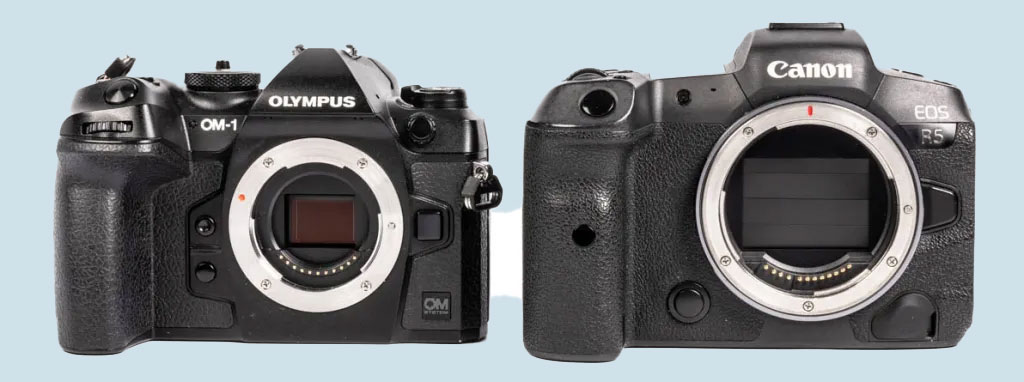
MFT vs full-frame: the cameras
Micro 4 Thirds (MFT) is supported by two digital camera manufacturers: OM Digital (previously Olympus) and Panasonic. In full-frame format, there’s extra model alternative: Canon, Leica, Nikon, Pentax, Sony and, curiously, Panasonic.
True, there may be extra to life and images than decision and what number of pixels one shoots. Nonetheless, full-frame is the place to be for these wanting plenty of megapixels. The Sony A7R V at $3,500 / £3,580 boasts an enormous 61MP.
Climbing down the worth ladder, pixel counts drop, too. A properly priced full-frame mirrorless is the Canon EOS R, a 30MP digital camera that may be had with a 24-105mm f/4-7.1 lens for $2,275 / £2,200. Go DSLR and the 36.4MP Pentax Okay-1 Mark II sells at $1,700 / £1,500 and the 26.2MP Canon EOS 6D Mark II is even cheaper at $1,400 / £1,350 physique solely.
MFT vs full-frame: the lenses
Whereas simply two MFT digital camera manufacturers share the identical lens mount, the image could be very totally different for lenses. See our information to the Finest Micro 4 Thirds lenses in 2024. There are choices from Olympus/OM-System, Panasonic, and third get together suppliers together with Laowa, Samyang, 7Artisans, Tamron, Voigtlander, MEIKE, Sigma and extra.
Understandably, the full-frame market enjoys large help, however there are lots of extra lens mounts on the market. Some methods are higher supplied for than others. A key comparability is the very restricted third get together lens help for Canon EOS R mirrorless cameras, with only a few handbook focus lenses out there; in contrast with Sony’s E-mount, which is extra broadly supported.
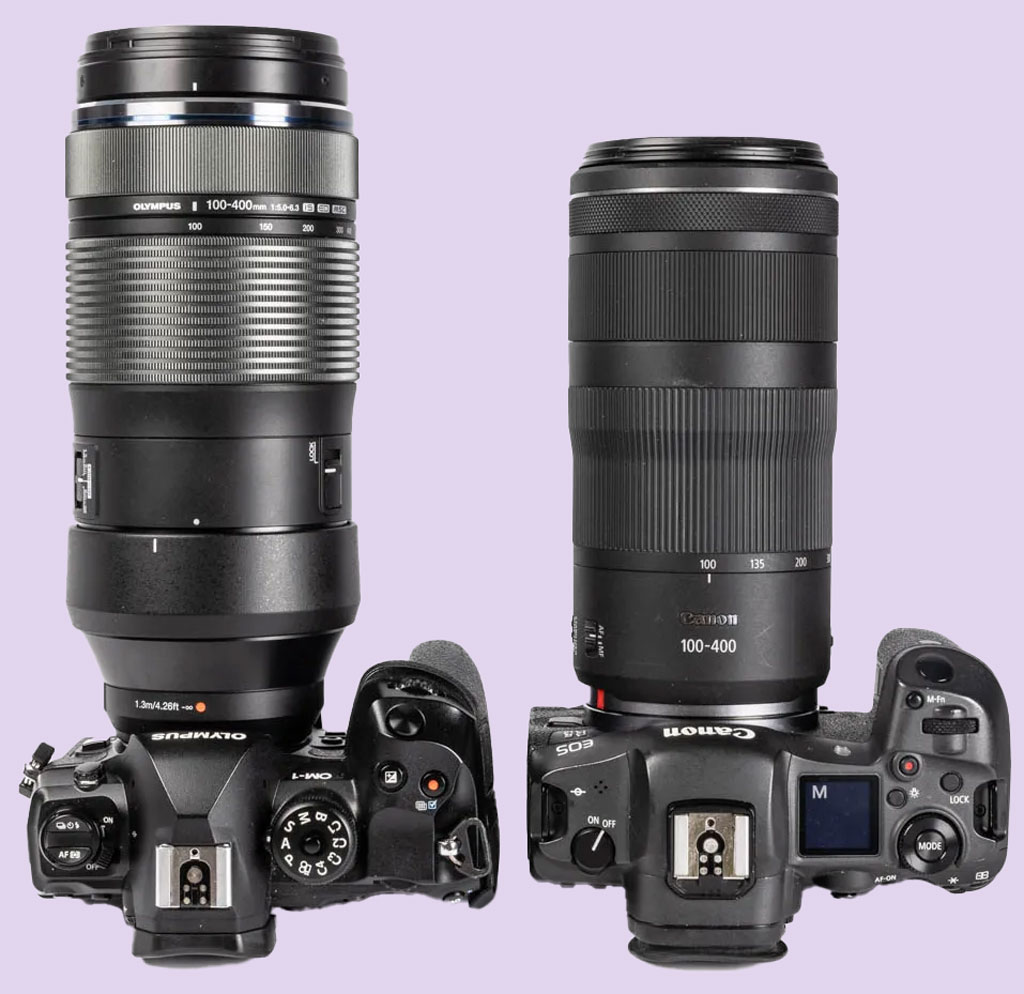
There may be loads of lens alternative to draw customers of each codecs however, availability apart, these within the smaller format have the benefit of being extra compact.
MFT vs full-frame: the crop issue
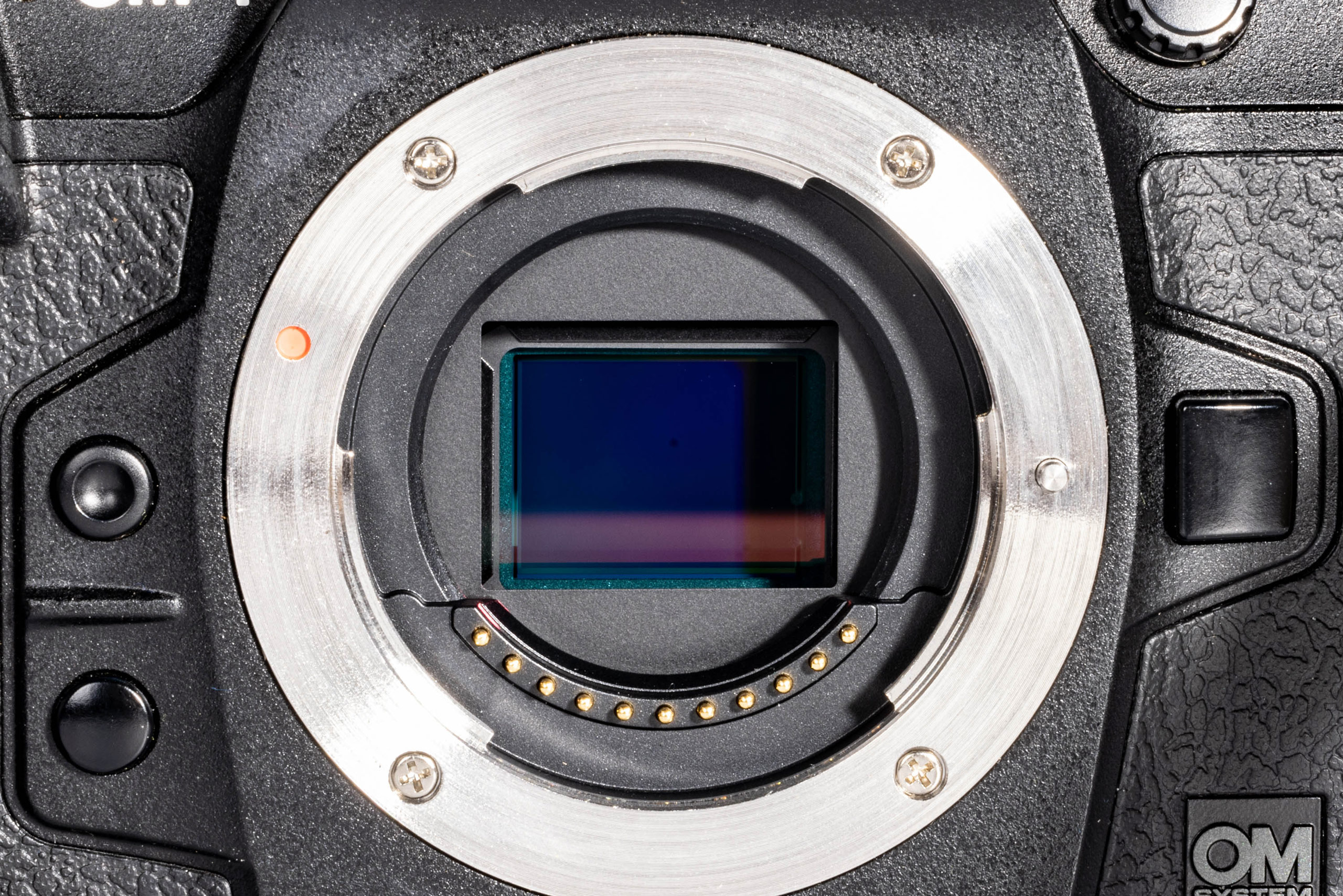
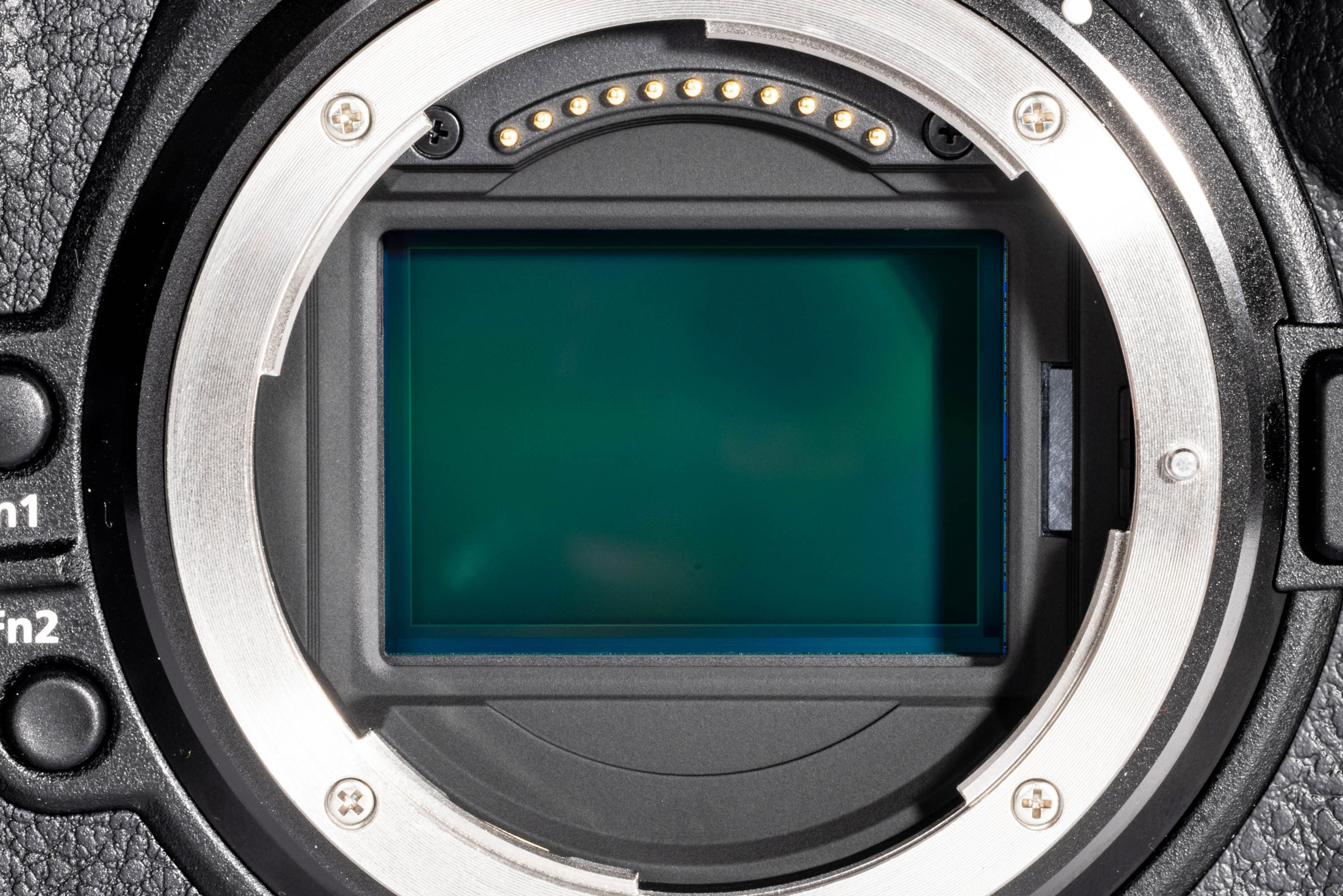
The Micro 4 Thirds format is predicated on a sensor dimension measuring 17.3x13mm, whereas the full-frame format is nominally 36x24mm.
The diagonal of MFT measures 21.6mm towards 43.2mm for full-frame, so nearly exactly double, which supplies us the 2x crop issue that’s at all times talked about in format comparisons.
The 2x crop issue is vital once we take into account lenses. A lens’s focal size is a set parameter so a 50mm lens is a 50mm lens whatever the digital camera format in use. In observe, although, use a 50mm focal size lens on an MFT digital camera and also you get the ‘equal’ discipline of view of a 100mm lens.
This 2x crop applies to all focal lengths however the true sensible profit kicks in with longer focal size lenses. It is a plus level for nature photographers.
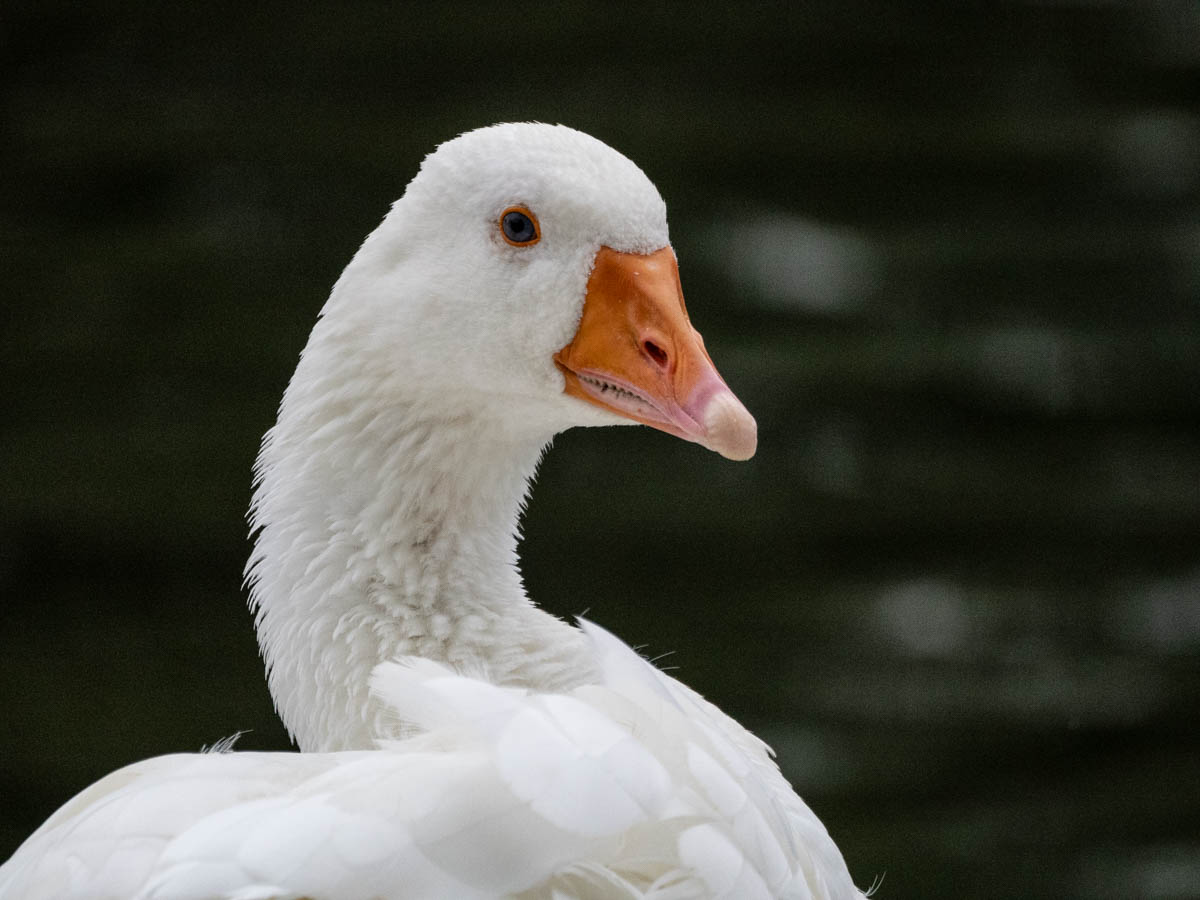
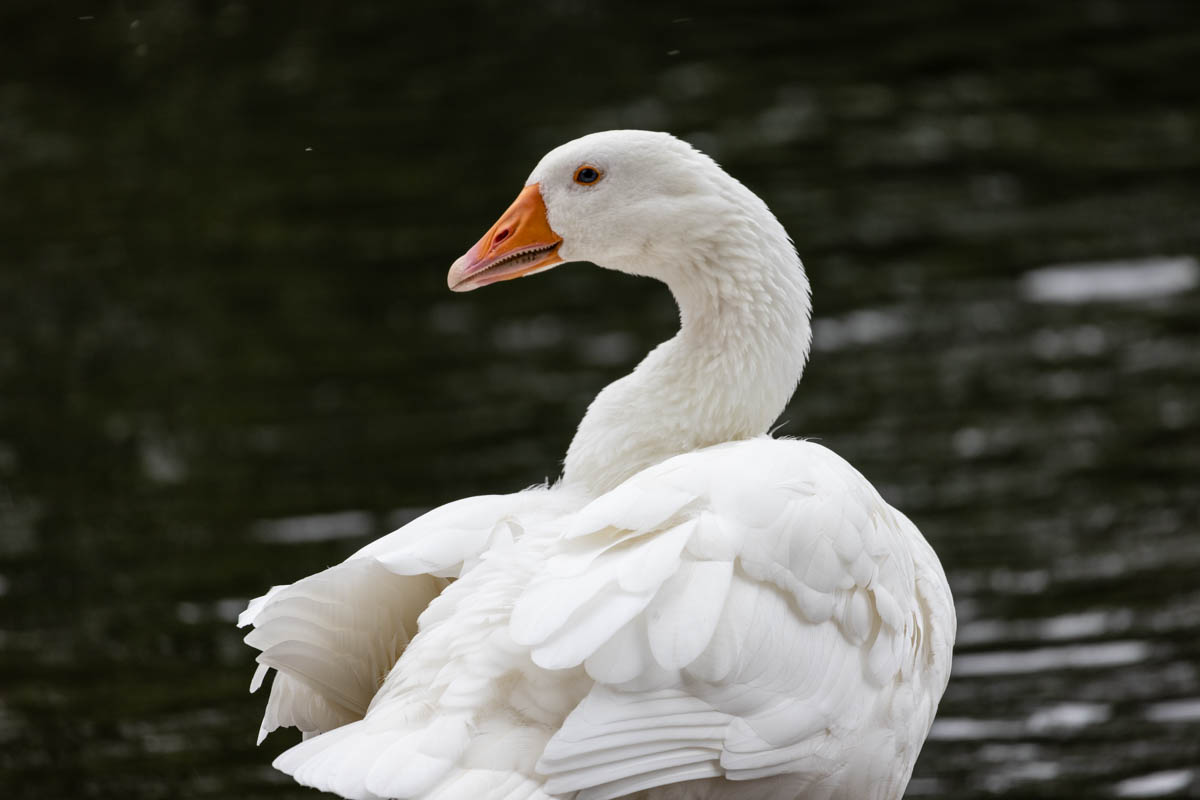
A 400mm lens used on MFT provides the equal of a 800mm view (in 35mm equal phrases). With each lenses a distant topic would be the similar dimension, however on the smaller MFT format will probably be extra frame-filling in contrast with the 35mm shot which can want cropping to provide the identical composition. See our examples under.
MFT vs full-frame: weight and bulk
Let’s have a look at some precise merchandise for instance attainable weight financial savings. The OM System 300mm f/4 IS PRO lens sells for $2800 / £2399, weighs 1.47kg and measures 22.7cm lengthy. Canon’s RF 600mm f/4 L IS USM weighs twice as a lot at 3.1kg, is greater than double the size at 47.2cm. It prices $12,999 / £14,179.
That is to match apples with pears, however is as shut as we will get. The very fact stays that the MFT 300mm lens, which supplies a 600mm equal in 35mm equal format, is a way more compact package deal, to not point out an amazing deal cheaper.
The load financial savings with cameras are much less dramatic and it is dependent upon the fashions being in contrast. The complete-frame Nikon Z7 II physique weighs 615g whereas the MFT Panasonic Lumix GH6 physique solely is definitely heavier at 833g though the OM System OM-1 is lighter at 599g physique solely.
Unfold weight financial savings throughout a digital camera or two, plus a number of lenses and that’s doubtlessly an enormous sensible profit for nature staff, particularly those that journey, however it is only one issue, albeit an vital one.
MFT vs full-frame: dealing with
You’ve seen how a lot bigger full-frame telephoto lenses are in contrast with MFT choices, and this has an affect on many elements of digital camera dealing with.
Clearly, there are challenges to carrying and utilizing heavier package, and lots of photographers are actually downsizing to the MFT format, accordingly.
Lugging heavy package round is one factor, however it’s fairly one other to handhold a hefty telephoto lens for a size of time. A help of some type is suggested. After all, we then have to think about shutter speeds to make sure sharp pictures. The bodily longer and heavier lenses demand a stable tripod, and that in flip provides to the burden. To guard and carry bigger package calls for a much bigger and heaver backpack; additional growing your total weight of package.
Many cameras have in-body picture stabilisation (IBIS). It is a nice profit, however your shutter pace nonetheless can’t be dropped down too gradual. As a hand-holding information, the reciprocal rule nonetheless applies – ie a 300mm lens wants a shutter pace of at the least 1/300sec – and whereas having IBIS means you’ll be able to drop one or two stops slower, care is required. How gradual you’ll be able to truly go is dependent upon your hand-holding abilities, the lens; even a breeze is an element.
MFT vs full-frame: picture high quality
It wouldn’t be truthful to make definitive picture high quality comparisons throughout totally different codecs as a result of the sensors and lenses are totally different. However let’s have a look at some stats and pictures taken on the similar time utilizing the Canon EOS R5 and OM System OM-1.
The OM-1 is a 20MP MFT digital camera and its uncooked recordsdata divulge heart’s contents to give a picture dimension of 5184 x 3888 pixels. Assuming 300ppi, and no software program interpolation, that provides a print dimension of 17.2 x 12.9in / 43.6 x 32.7cm. The complete-frame 45MP EOS R5’s uncooked recordsdata divulge heart’s contents to 8192 x 5464pixel recordsdata which interprets to a print dimension of 27.3 x 18.2in / 69.3 x 46.2cm.
Clearly, the bigger format has extra prospects for making large prints, and has many extra pixels to play with for a small topic that you just wish to amplify.
Cropping an MFT image to make a small topic an honest dimension can imply a much less crisp, extra fuzzy picture particularly if a excessive ISO is used. Nonetheless, with good enhancing such points are simply resolved.
MFT vs full-frame: ISO issues
The final premise is that the smaller the picture sensor the larger the quantity of digital noise produced as you progress up the ISO ladder. Digital noise appears like tiny colored or impartial specks in your image, and it’s extra noticeable when taking pictures in very low mild particularly within the shadows space.
As sensor expertise has superior, the adverse affect of digital noise spoiling photos has lessened and up to date cameras with back-side illuminated (BSI) or stacked sensors are spectacular even at greater ISO speeds like ISO 6400.
Lengthy lenses and sub-optimal lighting are half and parcel of nature images; the power to make use of greater ISO settings with confidence is vital. You may see in our instance how good it may be with photos on an OM System OM-1 and Canon EOS R5.
The nice information is that the newest noise discount software program could be very succesful when coping with grainy photos. Adobe Lightroom has not too long ago gained Denoise AI to brighten its all-round workflow abilities. Topaz Denoise AI and DxO PureRaw 3 are additionally staggeringly good at cleansing up excessive ISO recordsdata.
Click on to view enlarged photos:
ISO for ISO the full-frame photos present much less noise and are crisper however the MFT uncooked recordsdata aren’t far behind, and are improved vastly when processed with software program noise discount.
Within the above instance, we used Lightroom’s Denoise AI on the ISO 12,800 uncooked recordsdata and the outcomes are amazingly good.
MFT vs full-frame: depth-of-field and bokeh
Our focus right here is on nature images, the place depth-of-field and bokeh will be as vital as they’re with portrait and panorama work.
With macro, depth-of-field lessens as you method the topic, so having as a lot as attainable is an efficient factor. With lengthy lenses, which might be usually used at wider aperture values in nature taking pictures, depth-of-field is shallow and once more there are occasions once you may want extra. Regardless of the situation, focusing, as ever is essential, and MFT has its advantages.
Evaluating like with like, the MFT format provides extra depth-of-field and fewer background blur by an element of two – the 2x crop issue. Taking pictures the identical situation with a 50mm at f/2 lens on MFT provides twice as a lot depth-of-field as a 100mm at f/2 on full-frame. That is extremely useful with macro as a result of to shoot at f/8 on MFT, the 2x crop issue provides the equal depth-of-field of utilizing f/16 on full-frame.
Nonetheless, it is a minor matter for individuals who like shallow depth-of-field. Portraitists usually shoot with an 85mm f/1.8 large open for selective focus and beautiful blurry backgrounds so with MFT it’s essential use a 42.5mm at f/0.9 (NB the Panasonic 42.5mm f/1.2 is close-ish). A 85mm f/1.8 is a modest telephoto and 85mm f/1.4 and 85mm f/1.2 are highly regarded portrait lenses – you’ll battle to get a comparable impact on MFT if these lenses had been used at most aperture.
To take a look at the speculation, I took a pair of pictures that includes a 4 noticed chaser with an OM Digital OM-1 and Canon EOS R5 utilizing the equal focal size and aperture: 210mm at f/4 and 420mm and f/8 respectively. The out of focus grasses within the background look related and an in depth have a look at the insect reveals the identical zone of sharp focus, so the depth-of-field is kind of an identical.
MFT or full-frame: Conclusion
Nature and wildlife images are loved by many and as with all dialogue about digital camera format, there are professionals and cons to each MFT and full-frame. A lot is dependent upon your finances, expectations and your wants, be that bodily, pictorial or logistical.
So, if you happen to at present personal an intensive full-frame system and it’s changing into an excessive amount of of a burden to lug round (and we’re all getting older by the day!), going MFT is price contemplating. It’d make life simpler for travelling too.
If you’re taking a look at this selection, you must get on-line and verify the load and dimensions of your potential outfit simply to verify any financial savings are literally well worth the upheaval and value.
The opposite key consideration is final picture high quality. MFT sensors are much less succesful quality-wise in the case of excessive ISO efficiency – nature images usually wants excessive ISOs – and if you happen to did a side-by-side take a look at you’d see that full-frame is superior. However being superior means nothing if you happen to solely get pleasure from your work on-screen and don’t want recordsdata for outsized prints. MFT could be very succesful particularly when handled with the newest software program.
Associated studying: